
Universal Waste Management: Batteries, Lamps, Electronics, and Aerosols Done Right
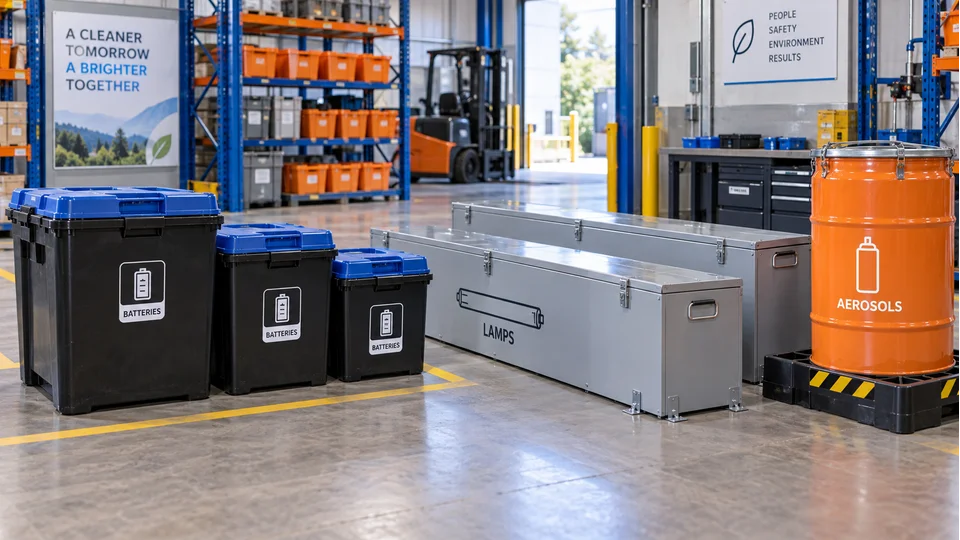
Universal waste rules exist to make it easier for facilities to do the right thing with common waste streams that would otherwise be hazardous waste. Spent batteries, fluorescent lamps, mercury-containing equipment, certain electronics, and aerosol cans all qualify. Manage them under the universal waste rules and you avoid most of the RCRA generator paperwork, the manifest requirement, and the strict accumulation time limits. Skip the rules and these become full hazardous waste under D-codes (D006 cadmium, D007 chromium, D008 lead, D009 mercury, D018 benzene, etc.) with the full regulatory weight that brings.
Universal waste management services cover the collection, transportation, recycling, and disposal of universal waste streams from your facility. The work is straightforward by hazmat standards, but doing it correctly requires understanding what qualifies as universal waste, what your state requires (state rules vary significantly), and where the universal waste stream actually goes for processing. The right contractor handles all of this in the background; the wrong one creates documentation gaps that surface during audits.
What Qualifies as Universal Waste
Federal universal waste categories under 40 CFR 273 are: batteries, pesticides, mercury-containing equipment, lamps, and aerosol cans. Most states have adopted these federal categories. Several states have added additional categories.
Batteries include nickel-cadmium, lithium-ion, lead-acid (sealed and non-sealed), nickel-metal hydride, and other battery types. Alkaline batteries are NOT regulated as hazardous waste federally and don't need universal waste management federally, although some states still regulate them.
Lamps include fluorescent tubes (T5, T8, T12, compact fluorescents), high-intensity discharge lamps (metal halide, sodium vapor, mercury vapor), and certain LED lamps with integrated drivers. The mercury content makes them hazardous waste when broken.
Mercury-containing equipment includes thermostats, switches, manometers, barometers, and various process control equipment. Older HVAC systems and industrial process equipment are common sources.
Pesticides include suspended or canceled pesticides held by a generator. This category is rarely applicable to most facilities outside of agriculture or pest control.
Aerosol cans were added to the federal universal waste rule in 2019 and many states have adopted the federal addition. Spent aerosol cans (full or partial) can be managed as universal waste rather than as ignitable hazardous waste (D001) provided certain handling requirements are met.
State-specific additions: California adds antifreeze and various electronics. Several states add cathode ray tubes (CRTs) and certain other electronics. New Hampshire, Vermont, Maine, and others have their own variations. If you operate in multiple states, you can't assume the federal list is complete.
Why Universal Waste Status Matters
Reduced documentation requirements. Universal waste does not require a Uniform Hazardous Waste Manifest for shipment. A bill of lading with basic information (waste type, quantities, generator and destination) is sufficient. This alone saves significant administrative burden compared to manifested hazardous waste shipments.
Longer accumulation times. Universal waste can be accumulated for up to one year, compared to the 90-day (LQG) or 180-day (SQG) limits for hazardous waste. This makes it practical to consolidate small quantities into single shipments.
Generator status not affected. Universal waste quantities don't count toward your hazardous waste generator status determination. A facility that generates only universal waste is technically not a hazardous waste generator at all.
Reduced storage requirements. Universal waste accumulation areas don't require the marking, container management, and inspection requirements that apply to hazardous waste accumulation areas. The handling rules are still strict but less onerous.
Recycling pathway preserved. Most universal waste streams (batteries especially) have valuable recoverable materials. The universal waste rules are designed to keep these streams in the recycling pathway rather than diverting them to landfill disposal as hazardous waste.
Universal Waste Generator Categories
Small Quantity Handler of Universal Waste (SQHUW) is the default category for most facilities. Less than 5,000 kg total of universal waste accumulated at any time. Most office buildings, retail stores, and small manufacturers fall here. SQHUWs have minimal regulatory requirements: keep waste containers closed, label them, train employees on proper handling, and ship them within one year.
Large Quantity Handler of Universal Waste (LQHUW) applies if you accumulate 5,000 kg or more of universal waste at any one time. This triggers additional requirements: EPA notification (if not already a hazardous waste generator), more detailed recordkeeping, and tracking individual shipments. Large institutional facilities (hospitals, universities, large industrial sites) sometimes hit LQHUW thresholds for fluorescent lamp accumulation.
The 5,000 kg threshold is total weight of all universal waste, not by category. A facility with 4,000 kg of batteries and 2,000 kg of lamps is an LQHUW even though no single category exceeds the threshold.
Most facilities never approach the LQHUW threshold because shipments happen regularly. The threshold is about accumulated quantity at any one time, not annual generation. A facility generating 10,000 kg per year of universal waste but shipping it monthly stays well below the SQHUW limit.
Practical Handling Requirements
Container management. Universal waste containers must be closed except when adding or removing waste. Containers must be in good condition, free from leaks, and compatible with the waste contents. Damaged batteries should be isolated in a separate container or specifically packaged for damaged batteries.
Container labeling. Labels must include the words "Universal Waste" followed by the type (e.g., "Universal Waste, Lamps" or "Universal Waste, Batteries"). The accumulation start date should be marked on the container or recorded in inventory logs. Some states require additional state-specific labeling.
Lamp packaging. Fluorescent lamps must be packaged to prevent breakage during accumulation and transportation. Original cardboard cases work. Specialized lamp boxes (Bulb Eater drums and similar) are common. Broken lamps generate elemental mercury vapor and require immediate cleanup with a mercury spill kit.
Battery handling. Lithium-ion batteries require terminal taping or individual bagging to prevent shorts that can cause thermal runaway and fires. This is the single most important universal waste handling requirement and the one most often skipped. Even a small lithium battery fire in an accumulation area can destroy the building.
Aerosol can handling. Spent aerosol cans must be either fully empty (no remaining propellant or product) or in a properly designed accumulation container. Puncturing aerosol cans is allowed under the federal universal waste rule but requires specific equipment designed for the purpose. DIY can puncturing has caused serious injuries and is not recommended.
Employee training. Universal waste handlers must receive training on proper handling, accumulation requirements, and emergency response. The training requirements are less onerous than RCRA personnel training but still required and should be documented.
Where Universal Waste Actually Goes
Battery recycling facilities recover lead, cadmium, nickel, lithium, and other valuable metals. Different battery chemistries go to different processors. Lead-acid batteries have the most established recycling infrastructure and can recover essentially all the lead and most of the plastic. Lithium-ion battery recycling is rapidly developing as the volume of EV batteries grows.
Lamp recycling facilities separate the components: glass, mercury, phosphor powder, and metal end caps. The mercury is recovered and reused. The glass is recycled into new products. The metal is sold as scrap. Modern lamp recycling recovers over 95% of input materials.
Mercury reclaimers recover mercury from thermostats, switches, and other mercury-containing equipment for reuse. The mercury market is constrained by environmental regulations limiting new mercury mining, making recovery from waste devices economically attractive.
Aerosol can recyclers process aerosol cans by puncturing, draining residual propellant and product, and recycling the metal. The propellant is captured and either combusted or recovered. The remaining product is managed based on its hazardous characteristics.
Electronics recyclers (e-waste) handle CRTs, computers, and other electronics in states where these qualify as universal waste. R2 (Responsible Recycling) and e-Stewards certifications indicate processors that meet defined environmental and worker safety standards.
What Universal Waste Service Costs in 2026
Universal waste pricing depends on volume, container type, and the specific waste stream.
Per-pound pricing for batteries: $0.50 to $2.50 per pound depending on chemistry. Lead-acid is cheapest (sometimes free or with a small refund). Lithium-ion is highest. Mixed batteries cost more due to sorting requirements.
Per-lamp pricing for fluorescent lamps: $0.30 to $0.80 per lamp depending on length and quantity. CFLs and HID lamps run $0.50 to $1.50 per lamp. Bulk pricing for facilities shipping pallets at a time runs lower.
Mercury-containing equipment: $5 to $25 per device depending on size and mercury content. Larger industrial mercury devices can run $100 to $500 per unit.
Aerosol cans: $1 to $5 per can depending on size and contents. Bulk shipments of fully empty cans run lower.
Pickup minimums: Most universal waste contractors have minimum charges of $250 to $750 per pickup for small SQHUW facilities. Recurring monthly or quarterly service is more economical than one-off pickups.
What drives cost variance: Distance to the recycling facility is a major factor. Facilities in metro areas with multiple recyclers nearby pay less than rural facilities. State-specific recycling fees add to the per-unit cost in some states. Damaged or non-standard items (broken lamps, damaged batteries) cost more due to additional handling.
Common Mistakes With Universal Waste
Treating universal waste like trash. Throwing fluorescent lamps in the dumpster, dropping batteries in the regular trash bin, or pitching aerosol cans into general waste. Each of these is technically a hazardous waste violation, even though the universal waste rule was specifically designed to make legal disposal easy.
Treating universal waste like full hazardous waste. The opposite mistake. Manifesting universal waste shipments, accumulating in 90-day cycles, and going through full LDR procedures wastes administrative effort and may force the waste into more expensive disposal pathways.
Improper labeling. Containers labeled just "Batteries" or "Lamps" without the "Universal Waste" prefix. Containers without accumulation start dates. Containers with handwritten labels that fade or fall off. Each labeling problem becomes an audit finding.
Mixing universal waste with hazardous waste. A drum of fluorescent lamps that gets a few drops of solvent splashed in is no longer universal waste. The whole drum becomes mixed hazardous waste with corresponding disposal cost. Keep universal waste accumulation areas separate from hazardous waste areas.
Skipping employee training. Maintenance staff, custodians, and shipping/receiving personnel are most likely to encounter universal waste, and they're often the least trained. Annual training that covers what's universal waste, where it goes, and what to do if it breaks should be standard.
Lithium battery fires. Increasingly common as more products contain lithium-ion. Failure to tape terminals, mixing damaged with intact batteries, or accumulating large quantities without fire suppression are all setting up problems.
How to Evaluate a Universal Waste Contractor
Ask about their downstream recyclers. A good universal waste contractor knows exactly where each waste stream ends up. They should be able to tell you which recycler processes batteries, which handles lamps, etc. R2 or e-Stewards certified processors for electronics are preferred.
Verify their state registrations. Universal waste transporters typically need state registrations in each state they operate in. National contractors have all 50-state coverage. Regional contractors may not.
Review their pricing structure. Per-unit pricing should be transparent. Watch for hidden fees: fuel surcharges, environmental compliance fees, container rental fees. The base price is sometimes deceptively low with fees stacked on top.
Container and packaging supplies. Most contractors provide labeled collection containers and replacement supplies. Verify what's included in the base service vs. charged separately.
Reporting capabilities. Even though manifests aren't required, you'll want recycling certificates and weight tickets for each shipment. These document responsible disposal for environmental reporting and corporate sustainability programs.
What to Have Ready Before You Call
Approximate volumes by category: how many batteries (estimate by container or pallet), how many lamps (by case or count), how many aerosol cans, etc.
Container situation: what you're storing the universal waste in now, where it's located, how often it accumulates.
Pickup frequency you want: monthly, quarterly, on-demand.
Site access: dock or ground-level pickup, hours of operation, escort requirements.
Special items: any large mercury devices, broken lamps requiring special handling, damaged batteries needing isolation.
Recycling certificate requirements: some corporate sustainability programs require specific certification language on disposal documents.
Related Resources
For RCRA generator basics, see our guide to LQG, SQG, and VSQG generator categories.
For accumulation rules in general, see our satellite accumulation area rules.
For broader hazardous waste storage requirements, see hazardous waste storage requirements.
For waste characterization to determine if material is universal waste vs. full hazardous waste, see our waste profiling service page.
FAQ
Q: Do alkaline batteries qualify as universal waste?
Federally, no. Alkaline batteries are not regulated as hazardous waste federally and can typically go to the trash, although recycling is preferred. Some states (California, Vermont, others) regulate them and require recycling.
Q: Can I throw fluorescent tubes in the dumpster if I only have a few?
No, even if you're a CESQG (now VSQG) generator. Fluorescent lamps contain mercury and qualify as D009 hazardous waste when broken. Universal waste management is the legal pathway. Several states have outright bans on landfill disposal of fluorescent lamps regardless of quantity.
Q: What's the deal with LED lamps?
Most LEDs don't contain mercury and aren't hazardous waste. However, some LEDs (especially older or lower-quality products) contain lead solder or other toxic components that may make them hazardous. The safest practice is to recycle LEDs through universal waste channels even though it's often not federally required.
Q: How long can I accumulate universal waste before shipping?
One year from the date the universal waste was first generated. Shorter if you choose, longer requires a special exemption that's rarely granted.
Q: Do I need any kind of EPA notification to handle universal waste?
SQHUW: no notification required at the federal level. LQHUW: notification using EPA Form 8700-12 if you don't already have an EPA ID for hazardous waste. Some states require state notifications regardless of generator status.
Need help with universal waste management? Find qualified contractors in our provider directory.