
Site Remediation: Soil, Groundwater, and PCB Cleanup From Investigation Through Closure
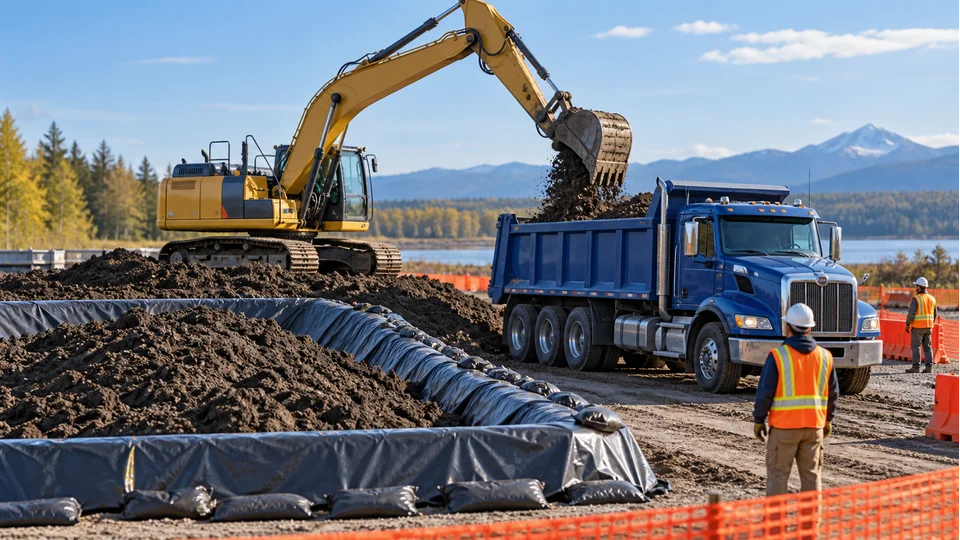
Site remediation is the long, expensive process of fixing what previous generations spilled, leaked, or buried. A spill response cleans up an active release. Remediation cleans up what got past the response, what was never reported, or what migrated through the soil and into the groundwater years before anyone noticed. The work spans months or years, costs anywhere from tens of thousands to tens of millions of dollars, and ends only when a regulatory agency signs off on closure.
Site remediation services cover the investigation, design, and execution of cleanup projects for contaminated soil, groundwater, sediment, and structures. The work is regulated under federal programs (CERCLA Superfund, RCRA Corrective Action, TSCA for PCBs), state Brownfield programs, and a patchwork of voluntary cleanup programs. The right approach depends on the contaminant, the site setting, the future use of the property, and the regulatory program governing the work.
When You Need Site Remediation
After a discovered release that exceeds applicable cleanup standards. The release might be from a leaking UST, an old surface spill, an underground pipeline failure, or simply the accumulated impact of decades of operations. Once contamination above standards is documented, the regulatory clock starts.
Before a property transaction when due diligence (Phase I or Phase II ESA) identifies recognized environmental conditions. Buyers want either a clean site or a defined remediation budget. Sellers want to either remediate to closure or carve out the contamination from the deal.
For property redevelopment through state Brownfield programs. Old industrial properties often have known contamination that limits redevelopment options. Brownfield programs provide regulatory pathways and sometimes financial incentives to remediate these sites for productive reuse.
Under regulatory order when state or federal agencies issue an enforcement action. This might follow a release report, an inspection finding, or a citizen complaint. Once the order is issued, you're on the agency's timeline whether you're ready or not.
For PCB-specific cleanups under TSCA Section 761. PCBs in transformer oil, hydraulic fluid, building materials (caulk, paint), or other historical sources require specific TSCA-compliant cleanup procedures and disposal pathways that differ from RCRA hazardous waste handling.
The Phases of a Site Remediation Project
Phase I Environmental Site Assessment (Phase I ESA) is a records and visual review only. The Phase I documents historical use, identifies recognized environmental conditions (RECs), and recommends whether a Phase II is warranted. No samples are collected during a Phase I. Most property transactions start here.
Phase II Environmental Site Assessment (Phase II ESA) involves actual sampling to confirm or rule out contamination identified in the Phase I. Soil borings, groundwater monitoring wells, soil gas surveys, and sediment sampling generate the data. The Phase II report documents what's there, where, and at what concentrations, compared to applicable cleanup standards.
Site characterization goes beyond Phase II to define the full extent of contamination. Additional borings and wells delineate the contamination footprint laterally and vertically. Hydrogeologic studies define groundwater flow direction and rate. Receptor surveys identify nearby drinking water wells, surface waters, and buildings that could be affected.
Remedial alternatives analysis compares cleanup options on cost, time, effectiveness, and regulatory acceptability. Options range from "no action with monitoring" to complete excavation and disposal. Most projects end up using a combination of techniques.
Remedial design translates the chosen approach into engineering plans, permits, and contractor specifications. The design phase often takes 6 to 18 months and involves input from regulators, the property owner, and design engineers.
Remedial action is the actual cleanup work in the field. Depending on the chosen approach, this could be a few weeks of excavation, several years of groundwater treatment, or decades of monitored natural attenuation.
Closure is the regulatory sign-off that the cleanup is complete. Closure can be unconditional (no restrictions) or conditional (with land use restrictions, monitoring requirements, or institutional controls).
Common Remediation Technologies
Excavation and offsite disposal is the most direct approach for contaminated soil. Dig it up, load it on trucks, and ship it to a disposal facility. Fast, certain, and visible to regulators. Expensive for large volumes. Limited to areas where excavation is physically feasible (no buildings, utilities, or property line constraints).
In-situ chemical oxidation (ISCO) injects oxidants (permanganate, persulfate, hydrogen peroxide) into the subsurface to destroy organic contaminants in place. Works well for petroleum hydrocarbons, chlorinated solvents, and some other organics. Avoids excavation but requires multiple injection events and rebound monitoring.
Bioremediation uses naturally occurring or augmented microorganisms to break down contaminants. Works for petroleum hydrocarbons, some chlorinated solvents, and some other organics. Slower than chemical oxidation but lower cost and lower disruption. Can be done in-situ or in soil treatment cells.
Pump and treat for groundwater extracts contaminated water, treats it above ground (typically with carbon adsorption or air stripping), and discharges or reinjects the treated water. Once the workhorse of groundwater remediation, now usually combined with or replaced by more aggressive technologies for source area treatment.
Permeable reactive barriers are subsurface treatment walls that intercept and treat contaminated groundwater as it flows through. Once installed, they require minimal operation and maintenance. Limited to specific contaminants and site conditions.
Soil vapor extraction (SVE) removes volatile contaminants from unsaturated soil by pulling vapor out of the subsurface. Effective for VOCs in permeable soils. Combined with air sparging when groundwater is also impacted.
Monitored natural attenuation (MNA) relies on natural processes (biodegradation, dispersion, volatilization) to reduce contaminant concentrations over time. Requires demonstrated decreasing trends and adequate plume containment. Lowest cost approach but requires the longest timeline and the most monitoring.
Stabilization and solidification mixes binding agents into contaminated soil to lock contaminants in a cement-like matrix. Used for heavy metals and some other immobile contaminants. Allows on-site disposal as a treated material rather than offsite hazardous waste disposal.
PCB Cleanup: A Specific TSCA Workflow
PCB cleanups follow TSCA Section 761, not RCRA. The cleanup standards, characterization requirements, and disposal pathways are all different from typical hazardous waste cleanup. Confusing the two leads to either over-spending (treating PCBs like RCRA waste) or non-compliance (treating RCRA waste like PCBs).
PCB cleanup levels depend on the use of the property. Unrestricted use: 1 ppm in soil. Low occupancy use: 25 ppm. High occupancy use varies. The cleanup level drives the volume of material that must be excavated or treated.
Self-implementing cleanup procedures under 40 CFR 761.61(a) allow some PCB cleanups to proceed without prior EPA approval, provided specific procedures are followed and documented. This pathway saves significant time but has narrow eligibility requirements.
Risk-based cleanup approval under 40 CFR 761.61(c) allows cleanup levels above the standard self-implementing levels with EPA approval. Used when standard cleanup levels are technically impractical or environmentally unwarranted.
PCB disposal pathways are limited and regulated. Liquid PCBs at 50 ppm or higher must go to a TSCA-approved incinerator. Solid PCB waste at 50 ppm or higher must go to a TSCA chemical waste landfill or be incinerated. The number of approved facilities is small and disposal costs are high.
Working Within the Regulatory Framework
State voluntary cleanup programs are the most common pathway for non-emergency remediation. Each state has its own program with specific application procedures, cleanup standards, and closure requirements. Most state programs offer a pathway to formal closure with reduced future liability.
State Brownfield programs add financial incentives (tax credits, grants, low-interest loans) for cleanup of properties intended for redevelopment. Brownfield work often has tighter timelines tied to development financing.
RCRA Corrective Action applies to permitted hazardous waste facilities. Different process, different timeline, different documentation requirements than voluntary cleanups. Run by EPA or authorized state agencies.
CERCLA (Superfund) applies to the worst sites that EPA places on the National Priorities List. Legally complex, financially burdensome, and politically high-visibility. Most contaminated sites do NOT end up as Superfund sites.
TSCA governs PCB cleanups regardless of any other applicable program. PCBs at a state Brownfield site still follow TSCA disposal requirements.
State and local building permits may still be required for excavation work, dewatering, or air emissions during the remediation. The regulatory cleanup approval doesn't override local construction requirements.
What Site Remediation Costs in 2026
Remediation costs are extraordinarily variable. The numbers below are typical ranges, not guarantees.
Phase I ESA: $2,500 to $7,500 for a typical commercial property. Larger or more complex sites can run $10,000 to $25,000.
Phase II ESA: $15,000 to $75,000 depending on the number of borings, wells, and analytical parameters. Larger investigations can run $100,000 to $500,000.
Site characterization (delineation): $50,000 to $300,000 depending on contamination footprint and hydrogeologic complexity.
Excavation and disposal of impacted soil: $100 to $500 per cubic yard for non-hazardous soil. $500 to $2,500 per cubic yard for hazardous waste classification. PCB-impacted soil at TSCA disposal levels can exceed $5,000 per cubic yard.
In-situ chemical oxidation: $20 to $100 per cubic yard treated. Typically requires multiple injection events plus performance monitoring.
Pump and treat (groundwater): $50,000 to $250,000 for system design and installation, plus $50,000 to $200,000 per year for operation and maintenance over multi-year project life.
PCB transformer cleanup (one transformer): $25,000 to $150,000 depending on volume of impacted soil and disposal requirements.
Multi-year monitoring after active remediation: $20,000 to $80,000 per year for typical small to medium sites.
What drives cost variance: Total contaminated volume is usually the largest cost driver. Hazardous classification (vs. non-hazardous) typically multiplies disposal costs by 5x to 10x. PCB content multiplies costs again. Sites in active commercial areas (where excavation must happen around occupied buildings) cost more than rural sites with open access.
How to Evaluate a Remediation Contractor
Look at the project manager assigned to your work. Remediation projects span years and the PM relationship matters more than the company brand. Ask who specifically will be your PM and review their project history.
Ask for similar project references. A contractor great at gas station UST cleanups may not be the right fit for a chlorinated solvent plume from a former dry cleaner. Match contractor experience to your specific contamination type.
Verify their state agency relationships. A contractor who has worked with your state's program before knows the inspectors, the typical comments, and the realistic timelines. A contractor new to the state will spend more billable time learning the program.
Review their report quality. Ask for a sample report (with client info redacted) from a similar project. Reports that are clear, well-organized, and defensible to regulators take more time to write but save money during agency review. Sloppy reports trigger comments and re-work.
Insurance. Pollution liability $5 million minimum, professional liability $2 million minimum, general liability $1 million minimum. Workers comp current. For multi-year projects, verify the policies will be renewed.
Their relationship with disposal facilities and treatment vendors. A contractor with established relationships can usually move material faster and at better pricing than one that has to set up new accounts for each project.
What to Have Ready Before You Call
Property records: historical use, prior owners, any prior environmental work.
Phase I ESA if one has been done. If not, that's typically the first step.
Any prior sampling data: previous Phase II results, regulatory correspondence, prior remediation records.
Site plan or survey showing buildings, paved areas, utilities, and property lines.
Surrounding land use: what's next door, are there nearby residences, drinking water wells, surface waters.
Future use plans: redevelopment intent, expected building footprint, any utility installation planned.
Regulatory contact: name and contact info for the agency project manager if one is assigned.
Budget reality: what's realistic for this project, what financing or grants are available.
Related Resources
For PCB-specific information, see our article on PCB contamination cleanup and TSCA requirements.
For UST removal projects, see our underground storage tank removal guide.
For Phase 1 due diligence, see our article on Phase 1 environmental site assessments.
For property transaction due diligence, see environmental due diligence for property buyers.
For penalty exposure context, see the real cost of environmental violations.
FAQ
Q: How long does a typical remediation project take?
From discovery to closure: 2 to 10 years for typical sites. Simple petroleum sites with limited contamination can close in 12 to 24 months. Complex chlorinated solvent or PCB sites can run 10 to 30 years.
Q: Who pays for remediation when contamination is discovered during a property sale?
It depends entirely on the purchase agreement. Common arrangements: seller remediates before closing, buyer takes the property at a reduced price and remediates after, or the parties split the cost. Talk to a real estate attorney before negotiating.
Q: Can contamination be left in place if it doesn't pose a current risk?
Often yes, with appropriate institutional controls (deed restrictions, engineering controls, monitoring). Most state programs allow risk-based closure with restrictions. The trade-off is permanent restrictions on land use vs. higher upfront cleanup costs.
Q: What is "closure" and what does it actually protect me from?
Closure is a written regulatory determination that the cleanup is complete and no further action is required (potentially with conditions). It limits future regulatory exposure for the documented contamination. It does NOT protect against new releases, contamination missed during investigation, or third-party toxic tort claims.
Q: Do I need a consultant AND a contractor, or can one company do both?
Either model works. Consultants design the work and oversee contractors. Some larger firms do both. Single-source has fewer interfaces but raises questions about objectivity in design choices that drive billable work. Separate consultant and contractor adds coordination overhead but provides independent review.
Need help with site remediation? Find qualified contractors in our provider directory.